
Logistics in Times of Uncertainty
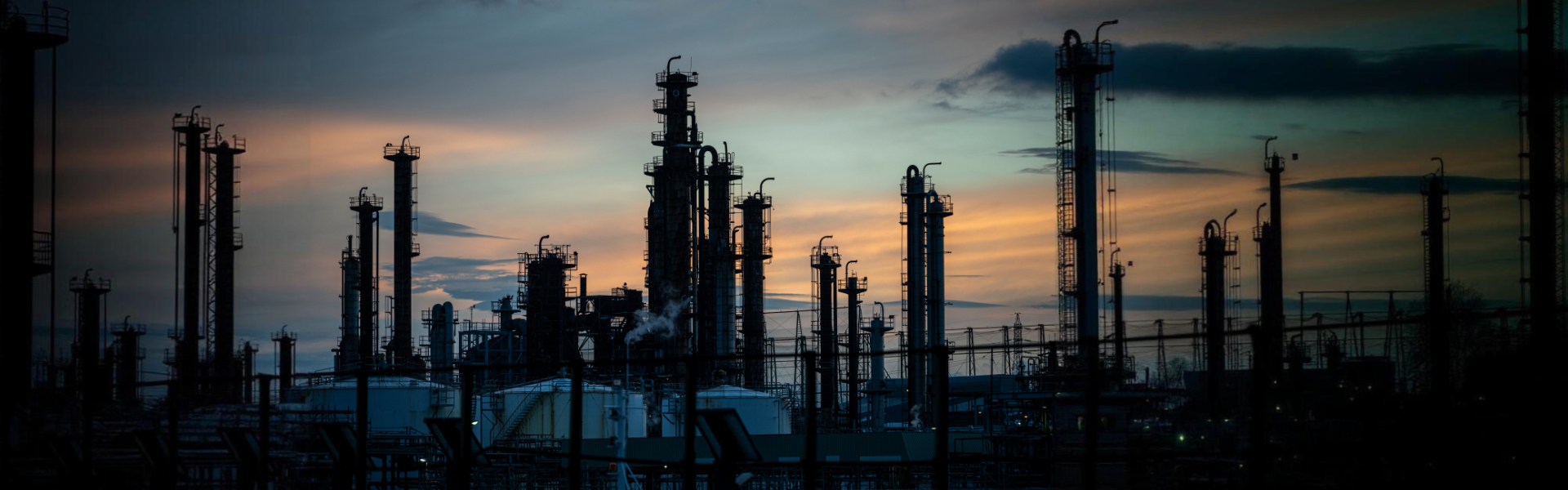
In recent months, rising fuel prices have gone from being a simple market fluctuation to becoming a structural phenomenon that is reshaping logistics globally—and particularly acutely in Mexico. For those of us operating in air, ground, and integrated logistics, this scenario represents not only an operational challenge, but also a clear signal that the environment in which we operate is undergoing deep and possibly permanent change.
The increase in fuel costs stems from a complex combination of international and local factors that have converged at a moment of high economic sensitivity. On a global level, geopolitical tensions have been decisive. Instability in the Middle East—a key oil-producing region—has generated ongoing uncertainty in energy markets. Armed conflicts, threats to strategic crude transportation routes, and political decisions by producing countries have constrained supply or, at the very least, heightened the perceived risk around its availability.
This is compounded by production control policies among major oil-exporting countries, which aim to sustain high prices amid an uncertain economic environment. Meanwhile, global demand has shown a significant recovery following years of slowdown, driven in particular by emerging economies and the resurgence of international trade. This imbalance between constrained supply and growing demand has steadily pushed prices upward.
Another key factor is the behavior of financial markets. Exchange rate volatility—especially against the U.S. dollar—directly impacts fuel costs for importing countries. Added to this are rising refining costs, driven both by limited installed capacity and stricter environmental regulations that increase processing expenses. Likewise, disruptions in global maritime transport—from port congestion to risks along strategic trade routes—have raised the logistical costs associated with moving energy resources.
In Mexico’s case, the impact of these factors is amplified by specific internal conditions. Inflation has been one of the most significant elements, raising not only fuel prices but also virtually all inputs required for logistics operations. This creates a domino effect, increasing costs for storage, maintenance, distribution, and ultimately the final price of goods.
Although the government has implemented measures such as tax incentives to cushion the impact on consumer prices, these have had limited reach given the magnitude of international pressures. Mexico’s dependence on imported refined fuels remains a critical factor, exposing the country to external market volatility. In addition, the national energy infrastructure still faces challenges in terms of capacity, efficiency, and modernization.
Ground transportation—the backbone of goods distribution in the country—has been one of the hardest hit. Diesel, essential for freight trucking, has seen significant increases that directly affect operating costs. This forces companies to make complex decisions: adjusting rates, renegotiating contracts, optimizing routes, and reducing margins to remain competitive.
In air transportation, the outlook is no less challenging. Fuel represents one of the highest costs in aircraft operations, so any increase has an immediate effect on financial structures. Companies have had to rethink flight frequencies, optimize cargo and passenger loads, and even redefine routes to maintain operational viability.
In this context, logistics is emerging as a key strategic element. It is no longer just about moving goods from one point to another, but about doing so in the most efficient, intelligent, and resilient way possible. The adoption of advanced technologies—such as transportation management systems (TMS), real-time data analytics, and route optimization tools—has become essential to navigating this highly volatile environment.
Additionally, a shift toward more sustainable models is becoming evident. The use of alternative fuels, fleet electrification, and the implementation of more responsible logistics practices are no longer optional—they are becoming necessary. Not only for environmental reasons, but also as a strategy to reduce dependence on fossil fuels and mitigate exposure to their volatility.
This environment is also transforming the relationship between logistics companies and their clients. Transparency in cost structures, flexibility in commercial agreements, and strategic collaboration are becoming essential to maintaining efficient operations. Clients, for their part, are beginning to understand that transportation costs are directly linked to global factors beyond the control of logistics operators.
In the medium and long term, rising fuel prices could drive structural changes in supply chains. The relocation of distribution centers, nearshoring, and inventory optimization are strategies gaining relevance as responses to a more costly and complex environment.
Ultimately, the rise in fuel prices is not an isolated phenomenon, but a clear sign that the logistics world is entering a new phase. For Mexico, it represents both a challenge and an opportunity. Companies that succeed in adapting through innovation, efficiency, and strategic vision will not only navigate this adverse context, but also position themselves as leaders in an industry that, now more than ever, demands constant evolution.
EZCONNECT
Callejon 7 No. 85 Mz. 45 Lote 3 Jardines de Santa Clara, C.P. 55450 Ecatepec de Morelos, México.
